Rep Licensing — Required Before You Sell
How selling legally works in Illinois
There's no CA-style individual license, no state exam, and no fee for reps. Instead, Illinois Shines regulates the entity: the company you sell for must be an Approved Vendor (AV) or a registered Marketing/Sales Designee under one, and it administers your training, badge, and agent ID under the program's Consumer Protection Handbook.
Your onboarding checklist — before any customer contact
- Criminal background check — required for every in-person rep; the company keeps the record on file.
- Illinois Shines training — company-run, covering the Consumer Protection Handbook, the Solrite offer (PPA terms, fees, billing), program capacity status, and the 3-day right of rescission. You sign a training certification, and a refresher is required every 6 months.
- Agent ID number + photo badge — worn visibly on an outer garment at all times in the field. Must show your full name, agent ID, photo, and company name/logo.
- The identification script — at every door/call: your name, your agent ID (on calls), your company, the Approved Vendor relationship, and that you are an independent seller not affiliated with any utility or government program and the customer will still have a utility bill.
- City solicitor permit — most Illinois municipalities (Springfield, Peoria, Decatur, Champaign, Bloomington all included) require their own door-to-door permit per rep, usually from the city clerk, ~$10-100. No knocking before 9am or after 7pm, and no-soliciting signs are binding.
Timeline: if the selling entity is already registered, you can be legally selling within days (background check + training + badge + town permit). A new Designee registration adds 2-4 weeks.
The Disclosure Form — your most important procedural duty
Every Illinois deal requires a state-standardized Disclosure Form (DF), generated in the Illinois Shines portal after the system is designed, and signed by the customer BEFORE the contract. For in-person sales you must review the entire form with the customer and let them ask questions.
- Signed copies must reach the customer within 24 hours (electronic). If material terms change, a new DF must be issued and signed.
- Never touch the customer's email. Helping a customer access or create an email account, or sending the DF to your own email, is explicitly prohibited. No email = hard-copy wet-sign with the email waiver, or walk away.
- Battery costs and fees must be in the DF — our deals include the 60 kWh Duracell, so make sure the storage terms are complete and accurate.
What gets reps and companies disciplined
The program publishes a named violations report and escalates from warnings to suspension (which cuts off the portal — no Disclosure Forms, no applications, no business). The phrases and behaviors that actually trigger enforcement:
- ❌ "Free solar," "no cost," "$0" — banned unless the customer truly owes nothing, ever
- ❌ "Eliminate your electric bill" / "fire your utility" — banned; the customer keeps a utility bill and you must say so
- ❌ Guaranteeing savings without a contractual savings guarantee
- ❌ Implying you're with Ameren, ComEd, the government, or "the Illinois Shines program" itself
- ❌ Misrepresenting RECs or net metering (remember: no 1:1 net metering for new IL customers)
Illinois also runs a Solar Restitution Program that pays harmed customers out of vendors' forfeited collateral — and the company can be forced to repay it. Complaints go to the program and the Attorney General; never obstruct or retaliate against a customer who files one.
Qualification
Location Qualifications
Must receive electric service from Ameren Illinois or ComEd — we now sell statewide across both major Illinois utilities (central and southern Illinois plus Chicago and northern Illinois).
An energy community is no longer required. Deals inside an eligible energy community (MAP ↗) pay full; deals in a non-energy community still qualify but pay less. Check the customer's county before quoting.
Home Qualifications
- Ideally has room in a garage or basement for batteries. Every Illinois home gets the 60 kWh Duracell Power Center — 12 modules in 3 stacks, taking up about 9 feet of wall space.
- Roof needs to have 10 years remaining expected life.
- No manufactured homes.
- Metal roofs okay.
- Residential properties/meters only — no commercial.
- Compatible with generators — see FAQ below.
- No add-on systems.
- No ground mounts.
- No, you can't build a shed for the batteries.
Credit Qualifications
- Homeowner must have 620+ credit with either Transunion or Experian.
- No co-signers. Single signer must either be on title, OR be the legal spouse of the person on title (with marriage certificate uploaded).
- LLC, Trust, etc. approved with document uploaded showing that contract signer is owner/executor of the Trust or LLC.
System Sizing
| System Size | Required Battery |
|---|---|
| 8.00 – 26.00 kW | Duracell 60 kWh |
Equipment Spec Sheets:
Complete Contract Items
Signed Agreement
Rule 1 — Name must match title exactly:
The name of the customer must match the name on title and must be a complete name.
- ❌ Customer name is Franklin Jones, signs contract as Frank Jones
- ❌ Title says "P RODRIGUEZ" so rep clicks "Replace" but the full name was Pedro Rodriguez
Rule 2 — Customer must sign with their own name:
Browsers sometimes have initials or signatures saved from other people. Verify the customer is signing as themselves.
- ❌ Customer John Smith signs with the initials RG
- ❌ Customer John Smith signs with signature "Mary Smith"
Verification Call
The purpose of the video welcome call is to make sure the customer understands the key terms of the agreement on their own — in case they have a dispute or issue with the contract later on. Customer must answer questions verbally and without anyone else talking during the call.
Common Rejections:
- ❌ Someone is talking to the customer during the call, answering questions or telling them what to say
- ❌ Customer is distracted or not verbally answering the questions so we can't tell whether they are actually understanding what's being asked
Billing Profile
Customer must connect a valid payment method through Stripe.
Please stay in the home or on the phone with the customer until you can see that an account or card has been successfully linked to Solrite.
Common Rejection:
- ❌ Customer stops the Stripe process on the "Success" screen before clicking "Return to Solrite" to connect the account to their Solrite billing profile
Utility Bill
We need a full utility bill that includes ALL of the following:
- Account number
- Meter number
- Customer name and address
- Usage history
Common Rejections:
- ❌ Only one page or partial bill uploaded
- ❌ Link or blurry photo uploaded rather than full PDF
Title Verification
The name on the contract must match the name on the property title. If the names don't match, the rep must upload documents showing the connection between the person who signed and the name on title.
Accepted Title Documents: SubcontractorHub checks title automatically against public property records, and a match passes straight through to Solrite. If it does not match, upload any one of the following:
- ✅ Third-party title report
- ✅ Current mortgage statement (dated within the last 2 months)
- ✅ Recorded deed: Grant Deed, Warranty Deed, or a similar legal document recorded with the registry of land records
- ✅ New build: evidence of home purchase at the contracted address in the Solrite customer’s name
- ✅ Recently closed sale: closing documents showing the homeowner name and the property address
Common Rejections:
- ❌ Name on title doesn't match the contract and no supporting documents uploaded
- ❌ Title is held by a trust or LLC but nothing is uploaded showing the signer owns the LLC or is a trustee of the trust
How Does a VPP Actually Work?
Understanding the layers of a real Virtual Power Plant
Levels of a Real VPP
Stop Solar Export
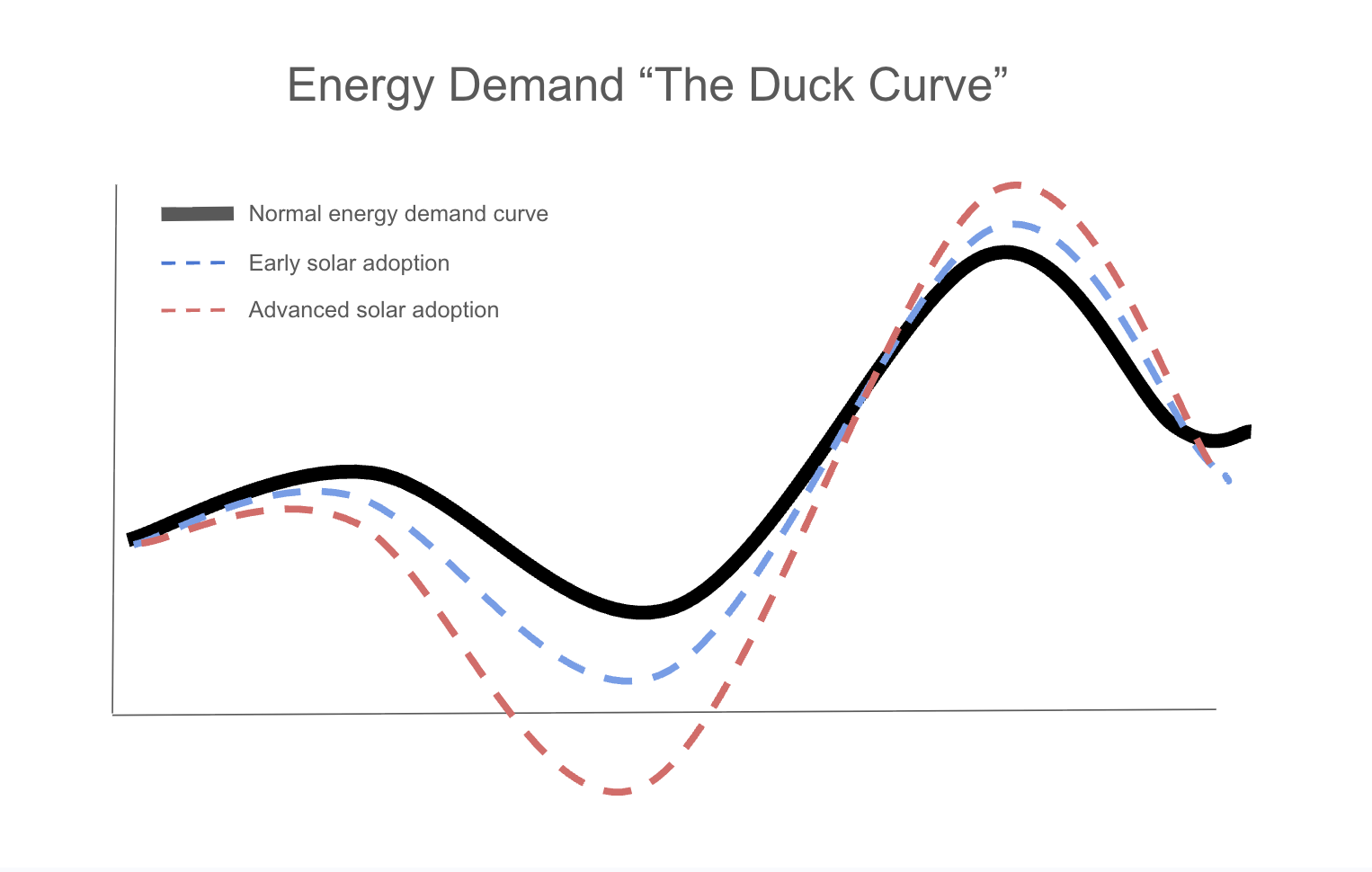
Extra solar power during the day is worthless to the grid and is often run into the ground because there is too much power for the grid to handle. The first and most basic use of the batteries is to capture the excess energy from the solar system during the day so it doesn't go back to the grid — already helping the grid avoid taking in too much power during the day.
Limit Peak Usage
The most expensive time of the day for energy is in the afternoon/evening hours. Since the home will have excess daytime solar energy stored in the batteries, the home can use this energy in the evening, freeing up more of that peak energy for other homes. This helps utilities better manage their production.
Grid Charge and Discharge
With a 60kWh reservoir, the solar system will rarely completely charge the batteries. This leaves additional reservoir that we can flex for the VPP. We charge the remainder of the battery from the grid when power is cheapest. If the home ends up needing more power than the solar produced on any given day, it can use battery power instead of buying at peak prices — this is what allows our retail partners to give customers a discounted rate. Any power unused can be sold back to the grid when prices are higher. We credit customers back for any power sold to the grid.
A Real VPP Is NOT…
- ❌ Draining your batteries into the grid for hours every day
- ❌ Solrite trading on the market with energy you paid for (through solar or grid charging) and pocketing the profits without crediting the customer
- ❌ Draining batteries before or during a blackout
Offset Best Practices
Get Full 12-Month Usage History
Request a full 12-month usage history from the customer's utility account. This provides the most accurate data for system sizing and offset projections.
Match System to Needs
While we do allow up to 150% offset, the additional production is not needed when homes have the right size batteries for a VPP. For the purposes of the VPP, lower offset is more efficient.
Do Not Promise "No More Bills"
The offset percentage is based on annual production numbers — not monthly. Even when a system may fully offset a home's usage annually, monthly bills with the utility will still fluctuate. Most people will still have small bills most months of the year.
Monitoring Examples
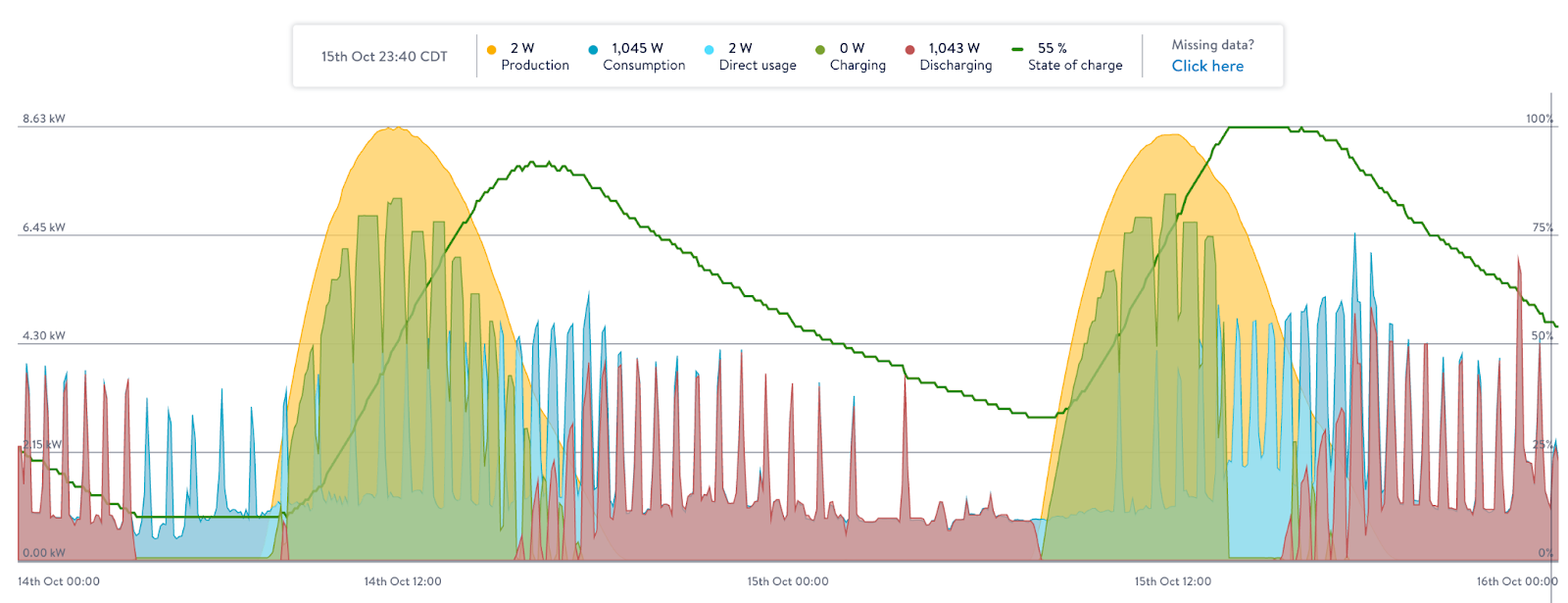
Example 1: Usage was very low during the day so the battery went from 10% to fully charged before the sun went down. With higher nighttime usage, the battery only made it until about midnight. The next day the sun was not as strong, but still enough to almost fully charge the battery and get through most of the night.
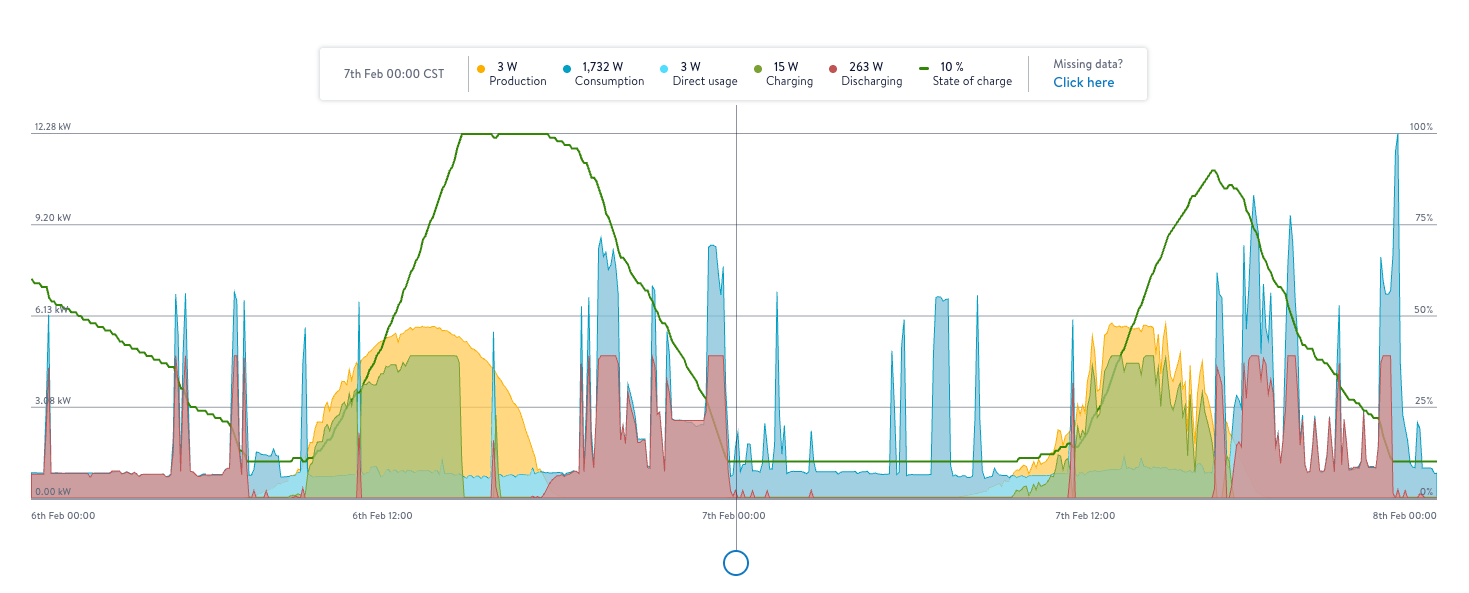
Example 2: The battery was already at 10% minimum before the sun came up. The solar did not fully charge the battery but it was enough to get through the whole night and still had some juice by the time the sun came up. The next day the battery filled up completely before the sun went down.
Battery Backup Included
How to Explain Battery Backup to Customers
Explain that batteries are included in the price — not free. The cost of the batteries is covered by the tax credit and utility company payments from participation in the VPP. These batteries are fully owned and actively managed in the VPP, and Solrite is able to capitalize more on their use when we fully control the battery. This means that Solrite controls the backup reserve percentages, emergency backup mode for storms, etc. — the customer will not be altering settings.
2.9% Escalator
How to Explain the Annual Escalator
Explain that the monthly price will increase by 2.9% each year. This is not a conditional increase — it will happen every year. The purpose of the escalator is to allow our prices to start out much lower and then keep up with inflation, rather than charging a much higher fixed rate from the start.
Frequently Asked Questions
Will the battery back up my whole home, including the AC?
Yes. Whole home backup is the default on Duracell systems. The Duracell Power Center was engineered as a backup battery first, so HVAC systems, central AC units, electric water heaters, and electric dryers can sit on the backup circuit.
Engineering confirms the final backup scope on every design. On a rare home with unusually large loads they may leave something off the backup circuit. If so, they flag it before install so you can reset the customer's expectation in advance.
For a long outage, coach them to lean on the low-draw options they already have (fans, space heaters, or a window unit in one room) rather than conditioning the whole house. The battery will carry it either way; this just buys them considerably more hours.
My customer says their utility bill went up after the battery was installed — why?
There are a few common causes to investigate:
- They're comparing to a seasonal low. If they signed in fall and the battery launched in winter, their bill will be higher simply due to heating usage and less solar production — not the battery.
- They haven't switched to the approved retail plan yet. The discounted rate requires the customer to be on the approved plan. If they're still on their old plan, they're not getting the benefit.
- The system is still in contract or NTP stage. The VPP doesn't activate and the rate benefit doesn't start until the system is fully commissioned and in service.
- Usage has increased. A new family member, new appliances, electric vehicle — any of these can raise usage independent of the system.
Does solar even work in Illinois winters?
Yes. Central and southern Illinois averages 4.4-4.7 peak sun hours per day — and panels actually run more efficiently in cold temperatures. A system in our territory produces roughly 1,250-1,400 kWh per kW installed per year, with far southern Illinois (Carbondale, Marion) producing meaningfully more than Chicagoland.
Snow: panels are installed at a tilt and snow typically slides off within a day or two — the dark glass sheds it faster than the surrounding roof. Annual production loss from snow is low single digits and already baked into our production estimates.
What matters is the annual number. December and January are the trough (roughly 40-50% of an average month); June through August each produce 30-40% above average. Set that expectation up front.
My customer heard Illinois ended net metering — is solar still worth it?
They heard right — and it's exactly why our offer makes sense in Illinois. Full retail (1:1) net metering ended for new solar customers on January 1, 2025. New Illinois customers, on both Ameren and ComEd, get credited for exports against the supply and transmission portion of the bill only — delivery charges are not offset.
That's a problem for solar-only companies, because exported power earns less than it used to. It's not a problem for us: the 60 kWh Duracell battery captures excess solar instead of exporting it, and every kWh the home self-consumes avoids the full retail rate. Battery-first design is structurally the right answer in post-2025 Illinois.
Will solar raise the customer's property taxes?
No. Illinois law (35 ILCS 200/10-10) gives solar energy systems a special assessment: the property is valued as if it had conventional equipment instead, and the lesser value is used. Residential solar does not increase property taxes in Illinois.
One practical note: the homeowner may need to file Form PTAX-330 with their county assessor to claim the special assessment — it's not automatic in every county.
Why are Illinois bills going up so fast?
Ameren Illinois residential rates have risen roughly 90% since 2021, and the June 2026 supply rate jumped from about 8.8¢ to roughly 11¢ per kWh — putting all-in summer rates around 20¢/kWh. The driver is the regional capacity market: the MISO capacity auction price spiked dramatically, and that cost flows straight to customers.
This is the strongest "why now" in Ameren territory. ComEd customers are on the same trajectory for a different reason. ComEd sits in PJM rather than MISO, and PJM capacity costs have risen sharply as well, flowing through to supply rates. Don't quote Ameren's figures to a ComEd customer. Pull the rate straight off their own bill and compare it to 12¢. The customer's 12¢ solar rate with a capped 2.9% annual escalator is predictable; their Ameren supply rate is not.
"Is this one of those solar scams?" — handling skepticism in Illinois
Expect this objection. Illinois consumer watchdogs and the Attorney General have publicized door-to-door solar scams, and the state runs a Solar Restitution Program for customers who were misled. Skepticism here is earned — meet it with substance, not pressure:
- Illinois requires solar sellers to register with the state (Illinois Power Agency Approved Vendor program) and follow a consumer-protection handbook.
- Customers receive a standardized state Disclosure Form before signing that spells out the terms in plain language — point to it, don't hide it.
- Offer to come back. A legitimate offer survives a night of thinking; a scam doesn't.
What about hail and storm damage?
Illinois sees real hail and the occasional derecho. Panels are tested and rated to withstand roughly 1-3 inch hail at highway speeds, but the better answer for the customer is structural: Solrite owns the equipment, so Solrite carries the equipment risk. If a storm damages the system, repair and replacement are on us — not on the homeowner's wallet.
Who gets the Illinois incentives — the RECs and rebates?
Solrite does, as the system owner — and the customer benefits through the rate. Under a third-party-owned agreement, the Illinois Shines renewable energy credits (RECs) and the utility smart inverter / battery rebates belong to the system owner (Ameren and ComEd both run equivalent programs). That incentive value is exactly what lets us offer a 60 kWh battery system at a low solar rate with $0 down.
The battery spec sheet says "backup" — what's the difference between a VPP battery and a regular backup battery?
All batteries can technically provide backup power — that's not the distinguishing feature. The difference is what a battery is engineered and certified to do beyond backup.
Most residential batteries on the market were built primarily as backup power devices with a basic demand response capability tacked on — meaning a few times a year, the grid operator can request a scheduled discharge. That's it.
The Duracell battery was engineered from the beginning for Virtual Power Plant participation in Europe, where it's been doing advanced grid services for over a decade. It's on its 11th generation. Duracell's DuracellConnect platform supports over a dozen grid services including frequency regulation, voltage support, and fast-response dispatches of 30 seconds to 5 minutes — none of which drain the battery in a way the customer would notice. This is what makes it a real VPP and not just a backup battery with a marketing label.
Why aren't other solar companies offering this program?
They'd like to — but they don't have the right battery. Most residential batteries were designed and marketed as backup products. They're just now starting to develop demand response capabilities, and what they offer today is limited to a couple of scheduled annual dispatches.
Duracell has been building for the grid in Europe for over a decade and has the engineering, certifications, and grid relationships required to run a real VPP. Other manufacturers are a few years behind in that specific capability. As they catch up, you'll start to see more programs like this emerge — but right now, this is largely unique to what Duracell and Solrite are doing together.
Does the customer own the solar and batteries?
No — Solrite retains ownership of all equipment under the VPA. The customer is purchasing access to the energy the system produces and the benefits of VPP participation — not the hardware itself.
This is actually the financially smarter position for the customer on batteries specifically. Residential batteries typically have a lifespan of 7–15 years depending on usage and chemistry. Under a 25-year agreement, the battery will likely need to be replaced at least once. If the customer owned it, that replacement — which can cost $10,000–$15,000 — would come out of their pocket. Because Solrite owns it, Solrite is contractually responsible for service and replacement at no cost to the homeowner.
How long does it take from contract to installation?
Timelines vary depending on contract stage completion, local permitting, and utility interconnection.
1. Contract Stage — Get this done fast
Nothing moves until contract stage is complete. The requirements are:
- Signed agreement (name matches title exactly)
- Completed video welcome call
- Billing profile connected through Stripe
- Full utility bill — complete PDF showing account number, meter number, usage, and customer name
The utility bill is the most common holdout. Make sure it's a full PDF — not a screenshot, not a link, not a partial upload. Get it submitted the same day you sign if possible.
2. Permitting
Illinois municipalities each have their own permitting process. Timelines can vary significantly by town. Some towns are faster than others — your project coordinator will guide the permitting process.
3. Utility Interconnection
After installation, the utility must approve interconnection before the system can go live. In Ameren Illinois territory, interconnection runs through the PowerClerk portal for interconnection applications. Residential solar+battery systems go through Level 1 review (certified inverters, 25 kW or less). After install, Ameren performs a witness test at the home before granting Permission to Operate — total utility-side timeline is typically 2-3 months from application to PTO. ComEd runs its own interconnection portal and approval process. The overall shape is similar, but confirm the current ComEd specifics with ops on your first ComEd deal rather than assuming the Ameren steps carry over.
What does the customer need to do after signing?
The customer has a few things to complete after signing:
- Complete the video welcome call — answering questions about their agreement on camera, clearly and without coaching.
- Connect a payment method through Stripe (bank account preferred; credit/debit cards add a $15/month surcharge).
- Provide a full utility bill — must be a complete PDF that shows account number, meter number, usage, and customer name.
- Be available for a site survey once the deal is in NTP.
- Sign the utility interconnection documents — the utility will send paperwork that the customer needs to sign. This is one of the most common causes of delays. Give your customer a heads-up that these are coming so they don't sit in their inbox for two weeks.
- If they live in an HOA or condo association — the customer will need to submit a solar installation application. We can provide all the documentation they need, but the customer must submit the application themselves.
- Be home on installation day.
After the system is live, the customer doesn't manage any settings — Solrite controls battery reserve percentages, emergency backup mode for storms, and VPP dispatch. The customer just pays their monthly VPA bill and uses their electricity normally.
What happens at the end of the 25-year agreement?
At the end of the 25-year VPA term, the customer has the option to:
- Renew the agreement
- Have the equipment removed at no cost
- Purchase the equipment at fair market value
The solar panels carry a 25-year linear power production warranty guaranteeing approximately 80% of rated output at year 25, so the system will still be producing meaningful power at that point.
Can a customer have a generator with this system?
Yes. Generators are compatible with the Solrite system.
The one thing to get right is load selection. The battery backs up a defined set of essential loads, and the generator covers whatever the customer chooses to put on it. The same load cannot be backed up by both, so the customer decides which circuits sit on battery backup and which sit on the generator.
Have that conversation during the site survey and design, not after install. Once the essential loads panel is built, changing the split means sending an electrician back out.
What if the roof needs repairs or replacement?
The roof must have at least 10 years of expected remaining life to qualify. If the roof needs replacement soon, the customer should address that before or at the same time as the solar installation — attempting to reroof after panels are installed is significantly more expensive because the panels need to be removed and reinstalled.
If a customer's roof is borderline, flag it honestly during the site survey conversation rather than discovering it at install. Roofing-related delays after a contract is signed are avoidable.
My customer lives in an HOA or condo association — who handles the approval?
The homeowner handles it — not us. HOAs and condo associations work with homeowners, not with contractors, installers, or sales reps.
The customer will need to submit a solar installation application. This is their responsibility. What we can do is provide everything they need to complete it:
- Engineered system plans and drawings
- Equipment spec sheets
- Any other documentation the HOA/association requires
The customer submits the application, follows up, and gets approval. We wait. Approval must happen before we can install, so the sooner the customer starts that process, the better.
📄 UCC-1 Filing — "Can you take my house?"
This comes up at the table constantly. Homeowners see the words "lien" and "filing" and assume their house is on the line. It is not. Answer it directly and move on, because hedging makes it sound worse than it is.
The one-line answer: a UCC-1 is a lien on the equipment, not on the home. It says the solar system and battery belong to us while you use them. It gives us no claim on the house, the land, or the equity.
| What it DOES | What it does NOT do |
|---|---|
| Puts a public notice on the panels, battery, and inverter | It is not a mortgage or a lien on the property |
| Keeps the equipment legally separate from the house | We cannot foreclose. There is no legal path to the home. |
| Protects both sides if the property changes hands | It does not affect their credit |
If they ask what happens when someone stops paying: be straight, do not soften it. It is a real bill and we expect it to be paid. If payments stop, we shut the system off and the account goes to collections, same as any unpaid bill. What does not happen is us taking the house.
If they ask about selling or refinancing: routine. At closing the agreement either transfers to the buyer or is paid off, and the UCC-1 is released. Title companies handle these every day. Tell them to mention it to their agent early and it is a normal step, not a problem.
Why it exists: we are paying for the system, so there has to be a public record that the equipment is ours while the customer uses it. Without it, the hardware could get treated as part of the house. The filing is what keeps the line clear between their home and our equipment.